If you're planning a new fence on a Lowcountry property, the material choice is the decision you'll feel for the next 20 years.
Wood, aluminum, and vinyl all hold up differently in coastal Georgia and South Carolina — salt-saturated air, sustained 80%+ summer humidity, occasional hurricane-force winds, and direct sun that bleaches finishes in 18 months. The right material for an inland Atlanta backyard isn't necessarily the right material for a Bluffton property line.
Here's how a Lowcountry fence contractor actually thinks about the three main materials and which one we'd install on our own house.
Wood is cheapest upfront, looks the most natural, needs the most maintenance, and lasts 12-20 years in coastal conditions. Aluminum is mid-cost, low-maintenance, lasts 30+ years, and looks great around pools or as a defining property border — but doesn't provide privacy. Vinyl is mid-to-high cost, completely maintenance-free, lasts 25+ years, and gives you full privacy — but doesn't look like wood no matter what the brochure says.
Wood fence in the Lowcountry
The default choice in coastal Georgia for 100+ years. Most homes in Savannah, Pooler, Bluffton, Hilton Head, and Beaufort still have wood fencing because it's familiar, looks natural, and is the cheapest option to install.
Styles you'll see most
- Shadowbox / board-on-board: Alternating planks on each side of the rails. Looks identical from both sides, lets some airflow through (matters in Lowcountry hurricanes), and is the most popular Lowcountry style.
- Solid privacy: Planks butted edge-to-edge on one side. Maximum privacy, blocks more wind, more visual mass.
- Picket: Spaced vertical pickets for decorative or low-property-line use. Doesn't provide privacy but defines the boundary.
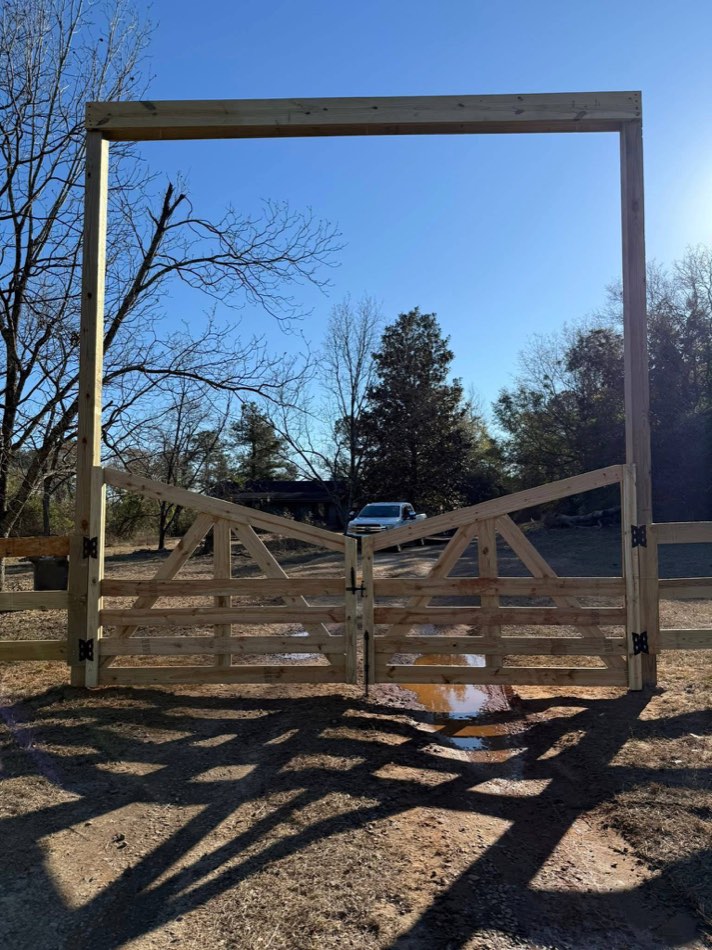
- Ranch / post-and-rail: 3 or 4 horizontal rails between heavy posts. Used for large property lines, horse pasture, or rural-feel front yards.
Wood species — what survives coastal conditions
- Pressure-treated Southern Yellow Pine: Standard for the Lowcountry. Chemically treated to resist rot and insects. Will fade to gray within 18 months without stain. Should last 12-18 years if you stain it every 2-3 years.
- Cedar: Premium upgrade. Naturally rot-resistant from the cedar oils. Holds stain better than PT pine. More expensive. Lasts 15-25 years with proper maintenance.
- Cypress: Locally available in coastal Georgia, naturally rot-resistant, beautiful weathered look if left unstained. Less common at lumber yards but worth asking about.
Lowcountry wood fence reality
- Year 1-2: Looks great with fresh stain. Maybe 1-2 boards that warp or split from initial drying.
- Year 3-6: Stain fading. Color drifting toward gray. Time to restain.
- Year 7-12: Board replacement starts. Posts at ground level start to show rot if not set in concrete properly. Gates need re-hanging as posts shift.
- Year 13-18: Major repair or full replacement on the horizon for most installs. Coastal humidity and salt air just don't agree with wood long-term.
What matters in a wood fence install
- Posts set in concrete to frost line depth (not just dirt-tamped)
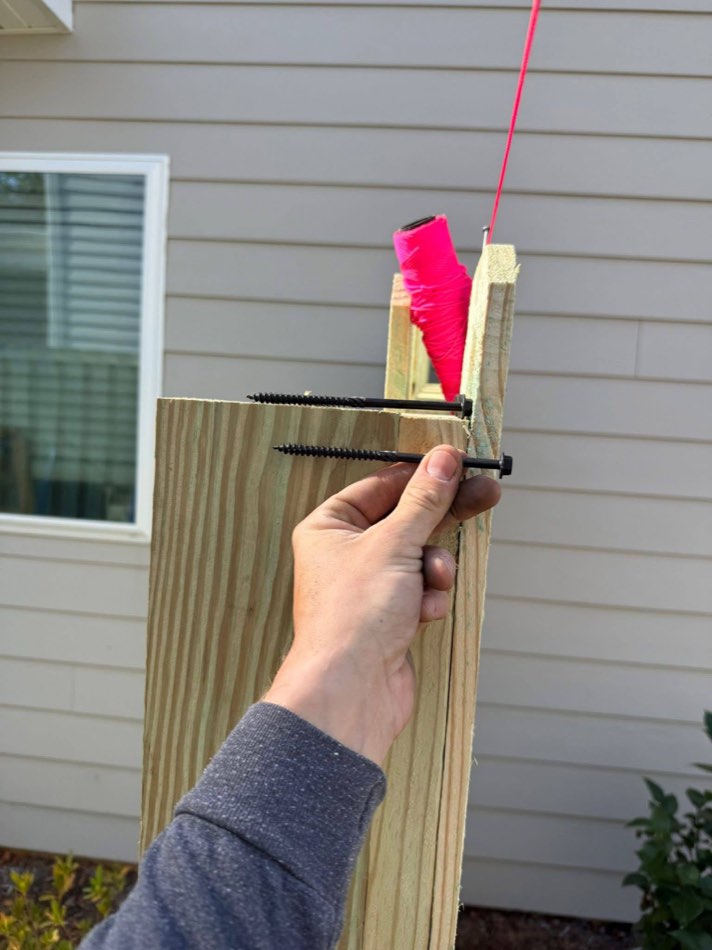
- Hot-dip galvanized or stainless steel fasteners (regular galvanized will rust through in coastal salt air within 5 years)
- Top of every post capped to keep water out of the end grain
- Pickets cut even with a string line for clean tops (you'll see jagged tops from 50 yards)
- Gates plumb and squared, with diagonal bracing or steel gate frames so they don't sag
Aluminum fence in the Lowcountry
Aluminum has become much more popular in Lowcountry installs in the last decade, especially as pool fencing and as property-line defining around modern coastal homes.
Why aluminum works coastal
Aluminum doesn't rust. It does oxidize on the surface but the oxidation layer protects the metal underneath rather than eating through it (the opposite of how steel and iron behave). Marine-grade powder-coated aluminum is rated for 20-30+ years of coastal exposure without significant degradation.
Where aluminum is the right choice
- Pool fencing — required by code in Lowcountry counties for any in-ground pool, and aluminum is the cleanest look that meets code
- Front-yard defining fence where you want a clean modern look without blocking the view
- Property line where you want a definitive boundary but don't need privacy
- Mixed installations — aluminum for the front, wood privacy for the back
Where aluminum isn't the right choice
- Anywhere you need privacy (it's open by design)
- Anywhere you want a traditional Lowcountry look
- Properties with very tight budgets — the install cost is higher than wood
What matters in an aluminum install
- Marine-grade powder coating (not standard powder coating — ask specifically)
- Posts set in concrete to required depth for your county and wind zone
- Gate hardware that matches the fence quality — cheap zinc hardware will corrode while the fence stays pristine
- Self-closing self-latching gate hardware required for pool fence code compliance
Vinyl fence in the Lowcountry
Vinyl is the maintenance-free option. Once it's installed correctly, you're done thinking about it for 25+ years. It's also the option that gets criticized the most for "not looking like wood" — which is true, no vinyl fence really does, even the premium wood-grain embossed products.
Why vinyl works coastal
Doesn't rust. Doesn't rot. Doesn't host mold (it can grow on the surface but rinses off with a hose). Doesn't absorb water. UV stabilizers in modern vinyl resist fading much better than 1990s-era vinyl did. Total maintenance: hose it off once a year, walk away.
Why people don't choose vinyl
- Upfront cost is higher than wood, comparable to mid-range aluminum
- Doesn't look authentic up close — the seams and the slight plastic sheen give it away
- Limited color options (white, tan, occasionally gray or black)
- Heat — dark vinyl in direct Lowcountry sun gets hot and can warp slightly over decades. Stick with light colors.
- Damaged sections are hard to repair — usually you replace whole panels rather than individual pickets
What matters in a vinyl install
- UV-stabilized vinyl rated for coastal exposure (not generic indoor-grade)
- Steel or aluminum-reinforced posts inside the vinyl post sleeves (uninforced vinyl posts can flex in high wind)
- Concrete-set posts to required depth
- Light or mid-tone color choice (dark colors absorb too much heat in Lowcountry sun)
Hurricane wind resistance
This is a Lowcountry consideration that doesn't matter inland. Coastal Chatham, Bryan, Effingham, Beaufort, and Jasper counties all have building codes that require fences to withstand specified wind loads. Solid privacy fences (wood or vinyl) catch significantly more wind than aluminum or shadowbox.
Real-world: in a Category 1 or 2 storm, properly-installed solid privacy fences mostly survive. Improperly installed ones (posts not deep enough, fasteners undersized, no diagonal bracing on gates) end up scattered across the neighborhood. Make sure your contractor pulls the permit and follows wind-load requirements for your zone.
What about the cost?
This is the section you'd normally expect a price breakdown in. We don't put pricing in blog posts because every fence quote depends on your specific run length, post count, gates, hardware, terrain, soil type (which affects how deep we have to dig), and access to your property. Two identical-looking houses can have very different fence quotes based on what's underground.
What we can say in general terms:
- Pressure-treated wood is the lowest install cost
- Cedar wood is a 30-50% upgrade over PT
- Mid-range aluminum is roughly 1.5-2x the cost of PT wood
- Vinyl is roughly 1.5-2.5x the cost of PT wood, depending on grade
- Premium aluminum with custom hardware can match vinyl pricing
The maintenance gap closes those numbers over time. By year 10, a maintained PT wood fence has cost real money in restaining and board replacement. By year 15, vinyl and aluminum have basically paid themselves back.
Permits in the Lowcountry
Every Lowcountry county we install in (Chatham, Bryan, Effingham, Beaufort, Jasper) has its own fence permit rules. Most require a permit for any fence over 6 feet tall, any fence around a pool, and any fence on a property line where the property line itself is ambiguous. We pull the permit, coordinate the inspection, and handle any HOA approval letters needed.
If your contractor offers to skip the permit, find a different contractor. Unpermitted fences cause real problems at resale time when a buyer's home inspector flags them.
What we'd install on our own house
For a back-yard privacy fence on a primary Lowcountry residence: 6-foot shadowbox in pressure-treated pine, stained dark gray or natural brown, posts set in concrete with stainless or hot-dip galvanized fasteners, capped post tops. The pressure-treated pine looks Lowcountry-authentic, fits the architecture of most coastal homes, and with proper maintenance lasts 15+ years. Restain every 3 years and it stays beautiful.
For a front-yard or property-defining fence: Black or bronze marine-grade aluminum picket. Maintenance-free, doesn't block the view, ages gracefully, and elevates the curb appeal of any home.
For a pool fence: Marine-grade aluminum, period. Required by code in most Lowcountry counties. Self-closing self-latching gate hardware. Nothing else fits all the requirements with the right look.
For a vinyl fence: Honestly? We don't install vinyl on our own properties. It works, it's maintenance-free, but it always reads as "plastic fence" up close. If maintenance-free is the highest priority, we recommend aluminum over vinyl every time unless you specifically need full privacy that aluminum can't provide.
If you want a real quote for your property, we walk the run, check the soil and any underground utility marks, look at terrain elevation changes, and write up a fixed price with no change orders. We service everywhere from Statesboro to Charleston.