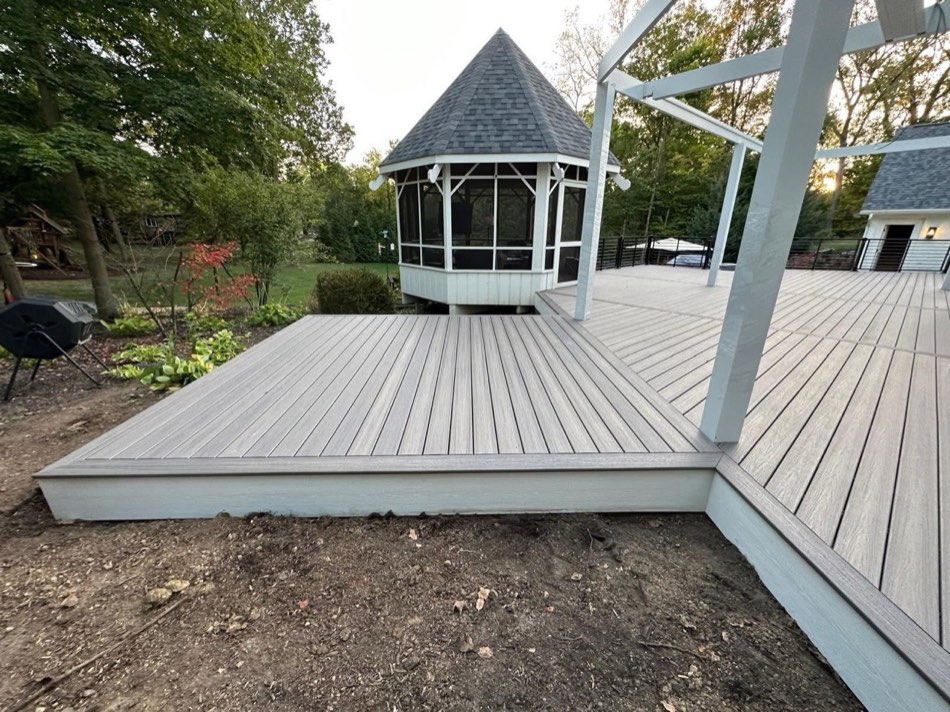
If you're building or replacing a deck in Savannah, Bluffton, Hilton Head, or anywhere in the Lowcountry, you'll spend the first half of the conversation with your contractor on one question: composite or pressure-treated wood?
It's the right question. The wrong materials in Coastal Georgia will warp, split, gray out, or rot within five summers. The right materials hold their finish for 20+ years. The price gap between the two looks big on day one and tiny over a decade.
Here's how a Lowcountry contractor actually thinks about the decision, with real cost ranges from jobs we've quoted this year.
Composite costs more upfront than pressure-treated, but lasts 2–3× longer with almost zero maintenance. For most coastal Lowcountry homeowners staying in their house 7+ years, composite pays for itself. For rental properties, flip homes, or short-term ownership, pressure-treated is the smarter math.
The two materials in 60 seconds
Pressure-treated wood (PT)
Southern Yellow Pine boards chemically treated to resist rot and insects. The Lowcountry's default for 50 years. Initial cost is low, install is fast, and every fastener and tool at the lumber yard is designed around it. The downside: it moves. Boards cup, split, twist, and check (develop hairline cracks) as they dry out and re-absorb humidity over and over again. Without yearly attention, a PT deck in Savannah looks tired by year 5 and worn out by year 10.
Composite decking
Engineered planks made from recycled wood fiber and polymer (Trex, TimberTech, Azek, Fiberon). The plank doesn't absorb water, doesn't host mold or termites, and doesn't crack or splinter. Costs more upfront. Manufacturer warranties run 25–50 years against stains, fade, and structural failure. Composite is also significantly more pleasant to walk on barefoot in August — no splinters and no scorching from direct sun in the better products.
What drives the price of a Lowcountry deck
Every deck quote is different. We won't put dollar amounts in a blog post (because the wrong number anchors expectations in the wrong place), but here's what actually moves the price up or down on a Lowcountry deck job:
- Material grade — pressure-treated pine, mid-range composite, and premium capped composite/PVC are three very different price tiers
- Square footage of the deck surface itself
- Elevation off the ground — taller decks need more framing and more stairs
- Cantilevered or multi-level designs versus a single-level rectangle
- Hidden fastener systems versus visible screws on composite
- Railing type — wood balusters vs. aluminum vs. cable vs. glass
- Picture-frame border on composite (we recommend it; adds material and labor)
- Post lights, riser lights, fan rough-ins
- Permit fees and inspection coordination (Chatham, Bryan, Effingham, Beaufort, Jasper counties all charge differently)
- Site access — backyards we can pull a truck and trailer up to are easier than carrying lumber 60 yards through a side gate
The honest way to get a real number for your deck is to have a contractor walk the property, measure, and write up a fixed quote. We do free in-person walkthroughs anywhere in our coverage area.
Lifespan in coastal conditions
This is where the materials separate sharply. The Lowcountry climate is one of the harshest deck environments in the continental US: salt-saturated air, daily 80%+ humidity from May through October, direct UV that bleaches stains in 18 months, and sudden 4-inch rainfalls that soak boards through.
Pressure-treated wood in the Lowcountry
- Year 1–3: Looks good with a fresh stain. Maybe 3–4 cracked boards from initial drying.
- Year 4–7: Stain failing. Surface graying. Some boards cup or split where the sun hits hardest. Yearly maintenance (pressure wash + restain) is the only way to keep it presentable.
- Year 8–12: Board replacement starts. Joist tops can begin to soften where standing water sits. Rail posts loosen.
- Year 13–18: Major repair or full replacement is on the table for most homeowners.
Composite in the Lowcountry
- Year 1–5: Looks identical to install day. No annual maintenance beyond an occasional rinse.
- Year 6–15: Some fade in direct sun on older composite generations. Premium capped products (Trex Transcend, Azek, TimberTech AZEK) hold color and resist fade much better.
- Year 16–25+: Boards still structurally sound. The framing underneath becomes the limiting factor — which is why we always use stainless or hot-dip galvanized framing fasteners on composite jobs.
Maintenance — the part the brochure doesn't show you
Maintenance is where pressure-treated decks really cost their owners more than the sticker price suggests.
Pressure-treated maintenance schedule (Lowcountry)
- Every 12–18 months: Pressure wash, let dry 48 hours, apply oil-based stain or solid-color deck stain. Budget for a contractor to do it right, or expect to spend a Saturday with a sprayer if you DIY.
- Every 3–5 years: Replace 5–15% of boards that have cracked, cupped, or rotted.
- Every 8–10 years: Re-tighten railing posts, replace any failed balusters, sister joists that show rot.
- 10-year maintenance reality: Real, recurring, and additive to the install cost. Most homeowners underestimate this until year 4.
Composite maintenance schedule
- Twice a year: Sweep off leaves and debris, rinse with garden hose. 30 minutes.
- Once a year: Quick scrub with soapy water on any food/wine spills. 1 hour.
- 10-year maintenance reality: Essentially nothing beyond a hose and dish soap.
Composite costs more upfront. Pressure-treated costs more in maintenance and replacement over time. By year 10, the gap between them is much smaller than the day-one sticker prices suggest, and the composite deck still has another 15+ years of life left.
Heat in August — which deck burns your bare feet?
This is a real Lowcountry question. Walk onto an unshaded deck on a 95° afternoon in July and you'll have an opinion fast.
Dark composite (charcoal, espresso, dark walnut) absorbs the most heat. On a 95° day, surface temps hit 150°+ in direct sun — too hot for bare feet or dogs.
Light composite (sand, weathered teak, light gray) stays significantly cooler — usually 20–30° lower than dark composite. Most Lowcountry homeowners do better with a light or mid-tone color.
Pressure-treated wood with a fresh stain runs cooler than dark composite but hotter than light composite. The trade-off is that PT cools faster when shaded because it doesn't hold heat as long.
If you have a south- or west-facing deck with no shade, ask your contractor specifically about heat-resistant composite lines (Trex Transcend "Spiced Rum," TimberTech AZEK "Coastline" in lighter tones, Fiberon "Sanctuary"). These are formulated to stay cooler underfoot.
What about looks?
Modern premium composites (Trex Transcend, TimberTech AZEK Vintage, Azek) have variegated grain patterns that read as real wood from a normal viewing distance. Up close on hands and knees you can tell, but standing on the deck or seeing it from the yard, most people can't.
Mid-range composites have more uniform color and a slightly plastic look. They're fine for utility decks but if your budget allows it, the upgrade to a premium line is worth it.
Pressure-treated freshly stained looks beautiful. Pressure-treated 4 years later looks tired unless someone has been maintaining it religiously.
Which one should you pick?
Go composite if:
- You plan to stay in the home 7+ years
- You don't want to spend a weekend a year on deck maintenance
- Your deck is highly visible (front porch, lake or marsh view, where guests gather)
- You're already going to spend on hidden fastener systems, picture-frame borders, or premium railings
- Pets, kids walking barefoot, or splinters are a concern
Go pressure-treated if:
- You're flipping the property or selling within 3 years
- This is a rental property and you want low upfront cost
- The deck is in a low-visibility utility area (back of garage, under-house storage platform)
- You enjoy doing the staining yourself (some people do!)
- Budget is genuinely the deciding factor today, with the understanding that maintenance will cost real money long-term
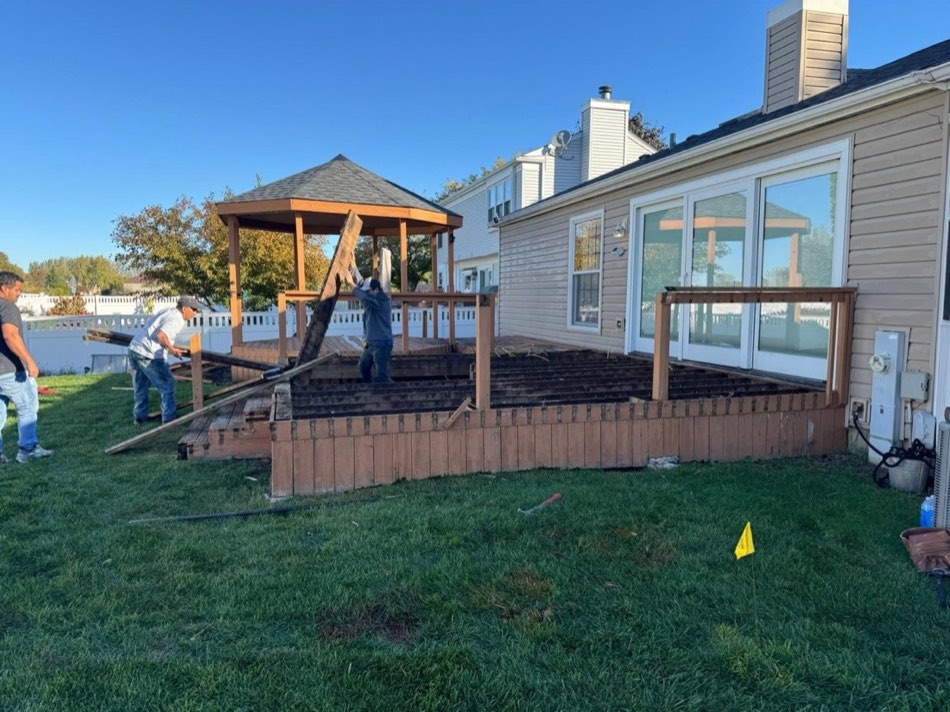
The framing underneath is where corners get cut
One thing you'll never hear in a sales pitch: composite decking is only as good as the framing it sits on. We've replaced 8-year-old composite decks where the manufacturer warranty was still in force, but the framing was rotted out because some other contractor used regular galvanized fasteners (which corrode in salt air) or undersized the joists.
What good Lowcountry deck framing looks like:
- Pressure-treated joists rated for ground contact (not above-ground)
- Stainless steel screws OR hot-dip galvanized (HDG) ring-shank nails — never regular galvanized
- Joist tops capped with butyl flashing tape to prevent water sitting on the top edge
- Beam connections with engineered metal connectors, not just toe-nailed
- Footings poured to county-required depth with the right pier sizes for your soil type
If your contractor isn't talking about the framing the same way they talk about the decking, ask why.
Permitting in the Lowcountry
Every county we work in (Chatham, Bryan, Effingham, Beaufort, Jasper) requires a permit for a new deck over 30" off the ground OR over 200 sq ft. Pulling the permit and coordinating the inspection is part of our job. If you've had a contractor offer to "skip the permit to save money" — get a different contractor. Permits exist for the same reason building codes do.
So what would we install on our own house?
For a primary residence in Bluffton, Savannah, or Hilton Head where you plan to stay 7+ years: mid-range or premium composite with stainless fasteners, picture-frame border, and light to mid-tone color. The math wins, the maintenance disappears, and the deck still looks new when you sell the house.
For a back-of-house utility deck where nobody hangs out: pressure-treated with annual restaining commitment — and only if you actually like staining.
If you're somewhere in between, we'll walk your house with you and quote both options side by side so you can make the call on real numbers.